
History
Violeta Parra: A Chilean Icon of Folk Music and Art
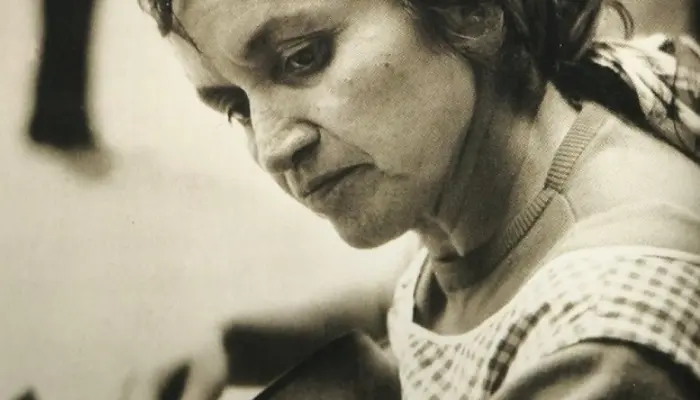
Violeta del Carmen Parra Sandoval (October 4, 1917 – February 5, 1967) was a groundbreaking Chilean composer, folklorist, ethnomusicologist, and visual artist. She is widely recognized as the pioneer of Nueva Canción Chilena (Chilean New Song), a movement that revitalized and reinvented Chilean folk music, extending its influence far beyond Chile's borders. Her life and work were the subject of the 2011 biopic Violeta Went to Heaven, directed by Andrés Wood.
Early Life and Musical Roots
Born in the small town of San Fabián de Alico, near San Carlos in southern Chile, Violeta Parra came from a musically inclined family. Her father was a music teacher, and her mother sang and played guitar. Among her siblings were the acclaimed poet Nicanor Parra and fellow folklorist Roberto Parra. Her children, Ángel Parra and Isabel Parra, also became significant figures in the Nueva Canción movement, continuing the family's artistic legacy.
The Parra family moved several times during Violeta's childhood, eventually settling in Chillán. It was here that Violeta began singing and playing guitar with her siblings, soon composing traditional Chilean music. Following her father's death in 1929, the family faced financial hardship, and Violeta and her siblings took on work to support them. In 1932, she moved to Santiago to attend the Normal School, later returning to live with her mother and siblings.
Performing and Political Engagement
The Parra siblings performed in Santiago nightclubs, interpreting various musical styles, including boleros, rancheras, and Mexican corridos. Violeta married railway driver Luis Cereceda in 1938, with whom she had two children. As a militant communist, Cereceda involved Parra in the progressive movement and the Communist Party of Chile. During this period, she performed under the name Violeta de Mayo, singing Spanish songs and appearing in theaters and restaurants. She also performed with her children, Isabel and Angel, in Spanish shows.
After separating from Cereceda in 1948, Violeta and her sister Hilda formed "The Parra Sisters," recording some of their work. She later married Luis Arce, and they had a daughter, Carmen Luisa, in 1949. Parra continued performing, touring Argentina with Hilda and her children.
Rediscovering Chilean Folklore
In 1952, a pivotal shift occurred in Parra's career. Driven by her brother Nicanor, she began collecting and documenting authentic Chilean folk music from across the country. Abandoning her earlier repertoire, she focused on folk songs and started composing her own music in traditional folk forms. She gave recitals at universities and was invited to teach folklore courses. Her performances and recordings, such as "Que Pena Siente el Alma" and "Verso por el Fin del Mundo," gained her considerable popularity.
Parra also learned to play the guitarrón, a 25-string Chilean instrument, from Don Isaiah Angulo. Her encounters with figures like Pablo Neruda, who would later dedicate a poem to her, further enriched her artistic journey.
International Recognition and Artistic Diversification
In 1954, Parra hosted a successful radio program, "Sing Violeta Parra," for Radio Chilena. Her participation in the "World Festival of Youth and Students" in Warsaw, Poland, in 1955, marked the beginning of her international exposure. She moved to Paris, performing at various venues and making contact with European artists. Tragically, her daughter Rosita Clara died during this period. Parra recorded her extensive collection of Chilean folklore at the National Sound Archive of the "Musée de l'Homme" in Paris and also made recordings for EMI-Odeon in London and the BBC.
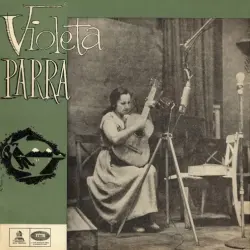
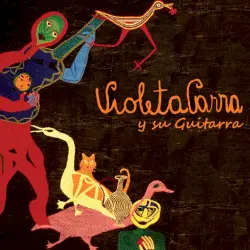
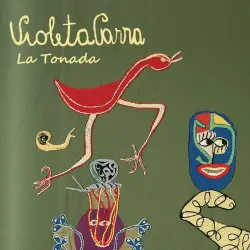
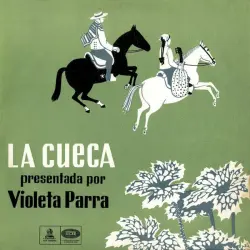
Returning to Chile in 1956, she recorded the first LP in the "The Folklore of Chile" series, "Violeta Parra and her guitar," which included her own compositions. She continued to release albums focusing on Chilean folk music, such as "La cueca" and "La tonada."
Beyond music, Parra developed a strong interest in visual arts, including ceramics, painting, and arpillera embroidery. A severe bout of hepatitis in 1959 led her to focus more intensely on these crafts, resulting in exhibitions of her oil paintings and arpilleras. She also began a romantic relationship with Swiss flautist Gilbert Favre in 1960.
Her travels and performances continued throughout the early 1960s. In 1962, she participated in the "World Festival of Youth and Students" in Helsinki and toured extensively in Europe with her children, performing on radio and television. She lived with Gilbert Favre in Geneva, dividing her time between France and Switzerland, where she continued to perform and exhibit her art. In 1963, she recorded revolutionary and peasant songs in Paris, later released as "Songs rediscovered in Paris." She also wrote the book "Popular Poetry of the Andes."
In 1964, Parra achieved a significant milestone with an exhibition of her arpilleras, oil paintings, and wire sculptures at the Museum of Decorative Arts of the Louvre in Paris – the first solo exhibition by a Latin American artist at the museum. Swiss television produced a documentary about her work, "Violeta Parra, Chilean Embroiderer."
The Peña and Later Years
Upon returning to South America in 1965, Parra's music incorporated new instruments like the Venezuelan cuatro and the charango. Her relationship with Gilbert Favre ended, partly due to his desire to live in Bolivia. Parra then dedicated considerable energy to reviving the concept of the Peña, a community center for arts and political activism. She established "La Carpa de la Reina," a cultural center and performance space in Santiago, inaugurated in December 1965. She also set up a folk peña at the International Fair of Santiago (FISA).
In 1966, the LP "La Carpa de La Reina" was released, featuring her performances and those of guest artists. She traveled to Bolivia to reconnect with Gilbert Favre and performed in her "carpa" upon her return to Chile, presenting Altiplano groups. She also toured southern Chile and recorded the LP "The Last Compositions of Violeta Parra" with her children and Alberto Zapicán.
Legacy and "Gracias a la Vida"
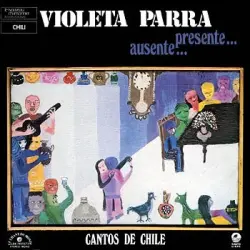
Violeta Parra's most renowned song, "Gracias a la Vida" (Thanks to Life), became an anthem throughout Latin America and beyond, popularized by artists such as Mercedes Sosa, Elis Regina, and Joan Baez. It remains one of the most covered Latin American songs in history. Written and recorded in 1964-65 following her separation from Favre, the song was released on her final album, Las Últimas Composiciones de Violeta Parra, shortly before her death.
The lyrics of "Gracias a la Vida" can be interpreted as a profound celebration of life's experiences, but also carry a poignant undertone, potentially reflecting her personal struggles and the contemplation of her own mortality. Another significant song, "Volver a los Diecisiete" (Being Seventeen-Old Again), also explores themes of youth and life, contrasting with her biographical trajectory.
Parra's music, deeply rooted in folk traditions, profoundly influenced the Nueva Canción movement and numerous Latin American artists, including Victor Jara. Her commitment to Chilean folklore and her interdisciplinary artistic approach left an indelible mark on culture.
Death and Commemoration
Violeta Parra died by suicide on February 5, 1967. Her death was met with widespread mourning and tributes in Chile and abroad. The Violeta Parra Foundation was established in 1992 by her children to preserve and disseminate her unpublished works. Her visual art has also been exhibited internationally, including at the Louvre Museum in Paris. Major exhibitions and publications commemorating her life and work have continued, celebrating her enduring legacy as a cultural icon.
Discography
Studio Albums
Posthumous Discography
Discography